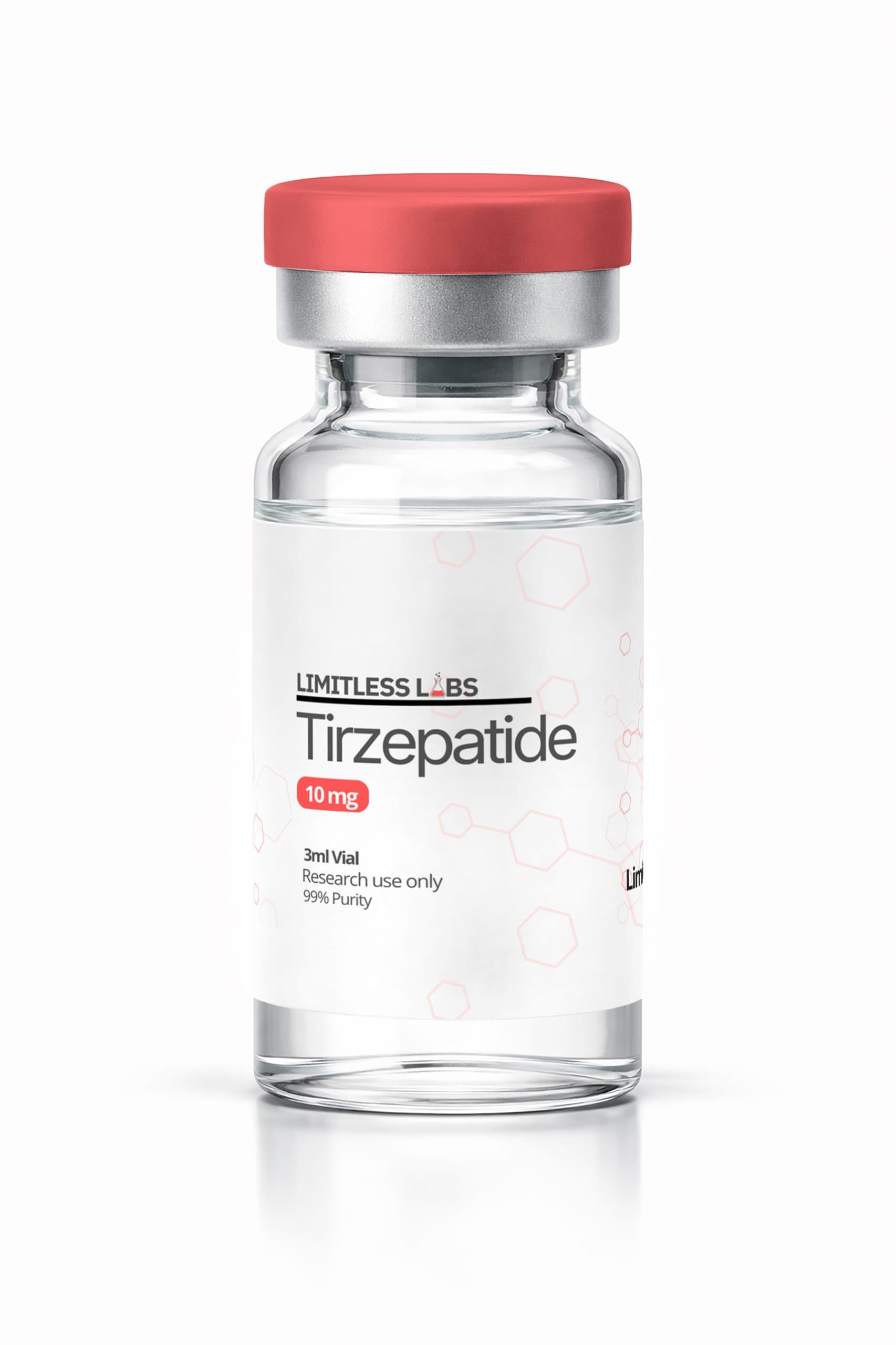
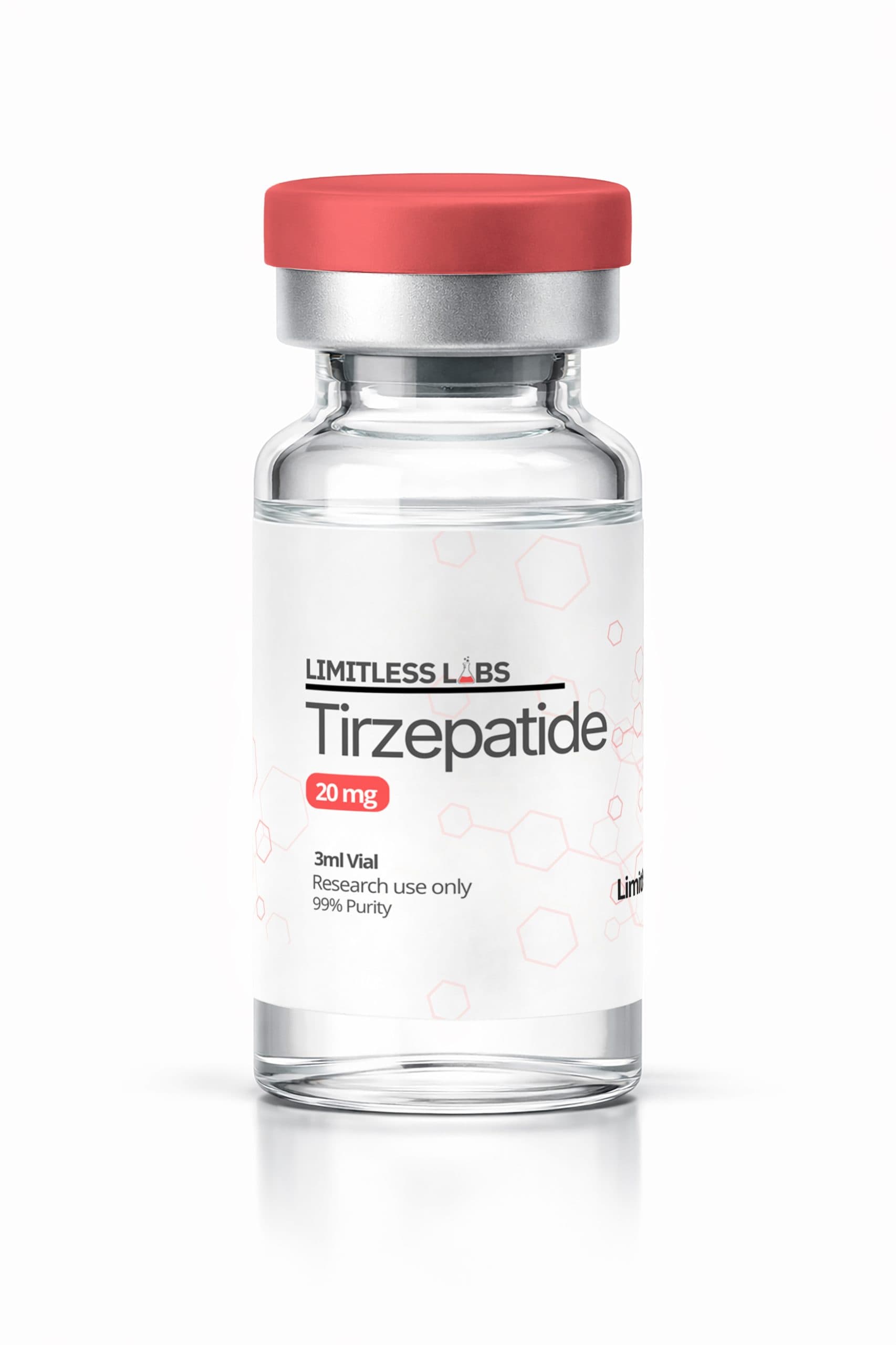
Tirzepatide is a synthetic peptide developed by Eli Lilly that activates two incretin hormone receptors at once — GIP and GLP-1 — making it the first dual agonist of its class to complete late-stage development. Unlike most compounds covered in this research library, tirzepatide is an FDA-approved pharmaceutical: it is marketed as Mounjaro for type 2 diabetes (approved 2022) and as Zepbound for chronic weight management (2023) and moderate-to-severe obstructive sleep apnea in adults with obesity (2024) [12][13][14]. In the pivotal SURMOUNT-1 obesity trial, participants receiving the highest dose experienced an average body-weight reduction of 20.9% over 72 weeks [4], and in the 2025 head-to-head SURMOUNT-5 trial, tirzepatide produced greater average weight reduction than semaglutide (20.2% versus 13.7%) [7]. This article is a summary of the published scientific literature — trial designs, reported outcomes, and open questions — not medical guidance.
What Is Tirzepatide?
Tirzepatide, known during development as LY3298176, is a 39-amino-acid single-chain peptide engineered on the backbone of native GIP (glucose-dependent insulinotropic polypeptide), modified so that it also activates the GLP-1 (glucagon-like peptide-1) receptor. A C20 fatty diacid moiety enables albumin binding and extends its half-life to roughly five days, which supported once-weekly subcutaneous administration in clinical trials [1].
Its development followed two large phase 3 programs, each producing a franchise of published trials:
- Discovery and preclinical work (2018). Coskun and colleagues at Lilly described the molecule's pharmacology in Molecular Metabolism, reporting balanced-to-GIP-favoring receptor activity and glucose- and weight-lowering effects in preclinical models and early clinical data [1].
- SURPASS (type 2 diabetes, 2021 onward). A series of phase 3 trials in type 2 diabetes, including monotherapy (SURPASS-1) [2] and an active-comparator trial against semaglutide 1 mg (SURPASS-2) [3], culminating in the SURPASS-CVOT cardiovascular outcomes trial published in late 2025 [11].
- SURMOUNT (obesity, 2022 onward). Phase 3 trials in obesity and overweight, spanning the placebo-controlled SURMOUNT-1 [4], type 2 diabetes plus obesity (SURMOUNT-2) [5], maintenance after withdrawal (SURMOUNT-4) [6], the head-to-head against semaglutide (SURMOUNT-5) [7], a three-year diabetes-prevention extension [8], and obstructive sleep apnea (SURMOUNT-OSA) [9].
- Beyond diabetes and obesity. The SUMMIT trial studied tirzepatide in heart failure with preserved ejection fraction (HFpEF) and obesity [10], and the SURMOUNT-MMO cardiovascular outcomes trial in people with obesity but without diabetes continues through approximately 2027 [16].
Mechanism of Action
Tirzepatide is described as a "dual agonist" or "twincretin" because it engages both incretin receptors that respond to nutrient intake:
- GLP-1 receptor. Activation enhances glucose-dependent insulin secretion, suppresses glucagon release when glucose is elevated, slows gastric emptying, and reduces appetite through central pathways. This is the mechanism of semaglutide and earlier GLP-1 receptor agonists.
- GIP receptor. GIP is the other major incretin. Its receptor activity contributes to glucose-dependent insulin secretion and appears to modulate adipose-tissue function, lipid buffering, and possibly central appetite signaling. In vitro, tirzepatide binds the GIP receptor with affinity comparable to native GIP, while its GLP-1 receptor affinity is roughly fivefold weaker than native GLP-1 — an intentionally "imbalanced" profile [1].
The working hypothesis in the literature is that GIP agonism adds to, and may amplify, GLP-1-mediated effects on appetite and insulin secretion, while improving the tolerability ceiling — allowing higher effective incretin activity for a given level of gastrointestinal side effects. Pharmacology studies also report that tirzepatide is a biased agonist at the GLP-1 receptor, favoring cAMP signaling over β-arrestin recruitment, which may reduce receptor internalization and prolong signaling [1]. The relative contribution of each mechanism to the clinical results remains an active research question.
Research Findings by Area
Glycemic outcomes (SURPASS program)
SURPASS-1 randomized 478 adults with early type 2 diabetes to once-weekly tirzepatide (5 mg, 10 mg, or 15 mg) or placebo as monotherapy for 40 weeks; HbA1c fell by 1.87 to 2.07 percentage points across doses versus essentially no change with placebo [2].
SURPASS-2 compared tirzepatide directly with semaglutide 1 mg in 1,879 adults on metformin over 40 weeks. HbA1c reductions were 2.01, 2.24, and 2.30 percentage points at 5 mg, 10 mg, and 15 mg respectively, versus 1.86 with semaglutide; body-weight reductions were 7.6, 9.3, and 11.2 kg versus 5.7 kg. All three doses met superiority criteria against semaglutide 1 mg on both measures [3]. It should be noted that semaglutide has since been studied at higher doses than the 1 mg used here.
Weight outcomes (SURMOUNT program)
SURMOUNT-1 randomized 2,539 adults with obesity, or overweight plus a weight-related complication (excluding diabetes), to tirzepatide 5 mg, 10 mg, or 15 mg or placebo for 72 weeks. Mean weight change was −15.0%, −19.5%, and −20.9% by dose versus −3.1% with placebo, and 91% of participants at 15 mg achieved at least 5% weight reduction versus 35% with placebo [4].
In SURMOUNT-2, conducted in 938 adults with both obesity and type 2 diabetes, weight reduction at 72 weeks averaged 12.8% (10 mg) and 14.7% (15 mg) versus 3.2% with placebo [5] — echoing the consistent finding across incretin programs that participants with type 2 diabetes lose somewhat less weight than those without.
SURMOUNT-4 examined what happens after stopping. All participants received open-label tirzepatide for 36 weeks (mean reduction 20.9%), then were randomized to continue or switch to placebo. By week 88, those who continued lost a further 5.5% on average, while those switched to placebo regained 14.0%; total mean change from baseline was −25.3% versus −9.9% [6].
SURMOUNT-5, published in 2025, compared tirzepatide and semaglutide specifically in obesity without diabetes, following the earlier SURPASS-2 diabetes comparison. In 751 adults with obesity but not diabetes treated for 72 weeks at maximum tolerated doses, tirzepatide produced a mean weight reduction of 20.2% versus 13.7% with semaglutide, and 31.6% of tirzepatide participants achieved at least 25% weight reduction versus 16.1% with semaglutide [7].
The three-year extension of SURMOUNT-1 followed 1,032 participants who had prediabetes at baseline for 176 weeks. Tirzepatide was associated with a substantially lower incidence of type 2 diabetes than placebo, alongside sustained mean weight reduction of up to 22.9% at the highest dose versus 2.1% with placebo [8].
At the European Congress on Obesity in May 2026, Lilly presented the SURMOUNT-MAINTAIN trial, reporting that continuing tirzepatide at the maximum tolerated dose after a 60-week open-label period maintained essentially all prior weight reduction, while stepping down to a lower maintenance level preserved roughly 70% of it — both statistically superior to discontinuation. These are conference-stage findings awaiting peer-reviewed publication [15].
Obstructive sleep apnea
SURMOUNT-OSA comprised two parallel 52-week trials in adults with moderate-to-severe obstructive sleep apnea and obesity — one in participants not using positive airway pressure (PAP) therapy and one in PAP users (469 participants total). Mean reduction in the apnea–hypopnea index was 25.3 events per hour versus 5.3 with placebo in the first trial, and 29.3 versus 5.5 in the second, with body-weight reductions of about 18–20% [9]. On the basis of these trials, the FDA approved Zepbound in December 2024 as the first medication for moderate-to-severe obstructive sleep apnea in adults with obesity [14].
Cardiovascular and heart failure findings
The SUMMIT trial randomized 731 adults with HFpEF and a body-mass index of at least 30 to tirzepatide 15 mg or placebo, with median follow-up of 104 weeks. A composite of cardiovascular death or worsening heart failure occurred in 9.9% of the tirzepatide group versus 15.3% with placebo (hazard ratio 0.62, a 38% relative risk reduction), and health-status scores (KCCQ-CSS) improved by 19.5 versus 12.7 points [10]. As of this writing, heart failure is not an approved indication.
SURPASS-CVOT, published in December 2025, is the dedicated cardiovascular outcomes trial: more than 13,000 adults with type 2 diabetes and atherosclerotic cardiovascular disease were randomized to tirzepatide or the GLP-1 agonist dulaglutide — an active comparator with proven cardiovascular efficacy — for a median follow-up of about four years. The primary composite (cardiovascular death, myocardial infarction, or stroke) occurred in 12.2% of tirzepatide participants versus 13.1% with dulaglutide, meeting noninferiority but not superiority on the primary endpoint (hazard ratio approximately 0.92). Secondary metabolic findings favored tirzepatide; gastrointestinal adverse events were more frequent (42.5% versus 35.9%) [11]. Whether tirzepatide reduces cardiovascular events versus placebo in people with obesity but without diabetes is the question assigned to SURMOUNT-MMO (NCT05556512), an event-driven morbidity and mortality trial with estimated completion around 2027 [16].
Approval history
Tirzepatide's regulatory trajectory distinguishes it from investigational peptides. The FDA approved it as Mounjaro for glycemic control in type 2 diabetes in May 2022 [12], as Zepbound for chronic weight management in adults with obesity or overweight plus a weight-related condition in November 2023 [13], and expanded Zepbound's label to moderate-to-severe obstructive sleep apnea with obesity in December 2024 [14]. Prescription products are dispensed through licensed pharmacies under medical supervision; research-grade tirzepatide sold as a laboratory reference material is a separate category that is not a drug product and is not for human use.
Limitations & Open Questions in the Literature
- Superiority versus an active cardiovascular comparator was not shown. SURPASS-CVOT met its prespecified noninferiority criterion against dulaglutide in high-risk type 2 diabetes, but did not establish superiority on the primary endpoint [11]. Placebo-controlled cardiovascular data in obesity without diabetes await SURMOUNT-MMO [16].
- Tolerability and discontinuation. Gastrointestinal adverse events — nausea, diarrhea, vomiting, constipation — were the most common findings across every trial, dose-related, and most pronounced during dose escalation [3][4][5]. In SURPASS-CVOT they occurred in 42.5% of tirzepatide participants [11].
- Weight regain after discontinuation. SURMOUNT-4 documented substantial regain within a year of switching to placebo [6], and SURMOUNT-MAINTAIN (still unpublished in full) addresses maintenance strategies [15]. The durability of benefit after full discontinuation remains a central open question for the class.
- Lean-mass loss. As with other incretin agents, a portion of weight lost is lean mass; the functional consequences for strength, bone density, and sarcopenia risk in older adults are not settled in the published literature.
- Topline versus peer-reviewed data. The SURMOUNT-MAINTAIN figures summarized above come from a conference presentation and analyst coverage rather than a journal publication [15].
- Mechanistic attribution. How much of tirzepatide's advantage over single GLP-1 agonism is attributable to GIP receptor signaling versus its pharmacokinetics and biased GLP-1 signaling remains debated in the pharmacology literature [1].
Frequently Asked Questions
What is tirzepatide, in one sentence? A once-weekly dual GIP/GLP-1 receptor agonist peptide developed by Eli Lilly, approved by the FDA as Mounjaro (type 2 diabetes) and Zepbound (chronic weight management and obstructive sleep apnea with obesity) [12][13][14].
Is tirzepatide FDA-approved? Yes — unlike most compounds in this library, tirzepatide is an approved prescription medicine in the United States and many other jurisdictions [12][13][14]. Research-grade material sold as a laboratory reference standard is a distinct category and is not for human use.
How does it differ from semaglutide and retatrutide? Semaglutide activates one receptor (GLP-1), tirzepatide two (GLP-1 + GIP), and the investigational retatrutide three (adding glucagon). In the SURMOUNT-5 head-to-head, participants receiving tirzepatide experienced greater average weight reduction than those receiving semaglutide (20.2% versus 13.7% at 72 weeks) [7].
How much weight reduction has been reported in trials? Mean reductions of 20.9% at 72 weeks at the highest dose in adults without diabetes [4], 14.7% in adults with type 2 diabetes [5], and up to 25.3% from baseline at 88 weeks with continued use in SURMOUNT-4 [6].
What did the cardiovascular research show? In SURPASS-CVOT, tirzepatide was noninferior to dulaglutide on major adverse cardiovascular events in high-risk type 2 diabetes, without establishing superiority on that primary endpoint [11]; in SUMMIT, participants with HFpEF and obesity receiving tirzepatide had a 38% lower risk of worsening heart failure or cardiovascular death [10].
What were the most common adverse events in trials? Dose-related gastrointestinal effects — nausea, diarrhea, vomiting, constipation — mostly mild to moderate and concentrated during dose escalation [3][4][5].
What major questions remain unanswered? Placebo-controlled cardiovascular outcomes in obesity without diabetes (SURMOUNT-MMO, ~2027) [16], long-term maintenance strategy after weight reduction [6][15], lean-mass consequences, and the precise mechanistic contribution of GIP agonism [1].
References
- Coskun T, et al. LY3298176, a novel dual GIP and GLP-1 receptor agonist for the treatment of type 2 diabetes mellitus: From discovery to clinical proof of concept. Mol Metab. 2018;18:3–14. doi:10.1016/j.molmet.2018.09.009. PMID: 30473097
- Rosenstock J, et al. Efficacy and safety of a novel dual GIP and GLP-1 receptor agonist tirzepatide in patients with type 2 diabetes (SURPASS-1): a double-blind, randomised, phase 3 trial. Lancet. 2021;398(10295):143–155. doi:10.1016/S0140-6736(21)01324-6. PMID: 34186022
- Frías JP, et al. Tirzepatide versus Semaglutide Once Weekly in Patients with Type 2 Diabetes. N Engl J Med. 2021;385(6):503–515. doi:10.1056/NEJMoa2107519. PMID: 34170647
- Jastreboff AM, et al. Tirzepatide Once Weekly for the Treatment of Obesity. N Engl J Med. 2022;387(3):205–216. doi:10.1056/NEJMoa2206038. PMID: 35658024
- Garvey WT, et al. Tirzepatide once weekly for the treatment of obesity in people with type 2 diabetes (SURMOUNT-2): a double-blind, randomised, multicentre, placebo-controlled, phase 3 trial. Lancet. 2023;402(10402):613–626. doi:10.1016/S0140-6736(23)01200-X. PMID: 37385275
- Aronne LJ, et al. Continued Treatment With Tirzepatide for Maintenance of Weight Reduction in Adults With Obesity: The SURMOUNT-4 Randomized Clinical Trial. JAMA. 2024;331(1):38–48. doi:10.1001/jama.2023.24945. PMID: 38078870
- Aronne LJ, et al. Tirzepatide as Compared with Semaglutide for the Treatment of Obesity. N Engl J Med. 2025;393(1):26–36. doi:10.1056/NEJMoa2416394. PMID: 40353578
- Jastreboff AM, et al. Tirzepatide for Obesity Treatment and Diabetes Prevention. N Engl J Med. 2025;392(10):958–971. doi:10.1056/NEJMoa2410819. PMID: 39536238
- Malhotra A, et al. Tirzepatide for the Treatment of Obstructive Sleep Apnea and Obesity. N Engl J Med. 2024;391(13):1193–1205. doi:10.1056/NEJMoa2404881. PMID: 38912654
- Packer M, et al. Tirzepatide for Heart Failure with Preserved Ejection Fraction and Obesity. N Engl J Med. 2025;392(5):427–437. doi:10.1056/NEJMoa2410027. PMID: 39555826
- Nicholls SJ, et al. Cardiovascular Outcomes with Tirzepatide versus Dulaglutide in Type 2 Diabetes. N Engl J Med. 2025;393(24):2409–2420. doi:10.1056/NEJMoa2505928. PMID: 41406444
- U.S. Food and Drug Administration. FDA Approves Novel, Dual-Targeted Treatment for Type 2 Diabetes (Mounjaro). Press release, May 13, 2022. https://www.fda.gov/news-events/press-announcements/fda-approves-novel-dual-targeted-treatment-type-2-diabetes
- U.S. Food and Drug Administration. FDA Approves New Medication for Chronic Weight Management (Zepbound). Press release, November 8, 2023. https://www.fda.gov/news-events/press-announcements/fda-approves-new-medication-chronic-weight-management
- Eli Lilly and Company. FDA approves Zepbound (tirzepatide) as the first and only prescription medicine for moderate-to-severe obstructive sleep apnea in adults with obesity. Press release, December 20, 2024. https://www.prnewswire.com/news-releases/fda-approves-zepbound-tirzepatide-as-the-first-and-only-prescription-medicine-for-moderate-to-severe-obstructive-sleep-apnea-in-adults-with-obesity-302337722.html
- Pharmaceutical Technology. ECO 2026: SURMOUNT-MAINTAIN proves tirzepatide sustains weight loss long term. May 2026. https://www.pharmaceutical-technology.com/analyst-comment/eco-2026-surmount-maintain-tirzepatide-weight-loss/
- ClinicalTrials.gov. A Study of Tirzepatide (LY3298176) on the Reduction on Morbidity and Mortality in Adults With Obesity (SURMOUNT-MMO). NCT05556512. https://clinicaltrials.gov/study/NCT05556512
This article summarizes published scientific literature for educational purposes only. Tirzepatide is an FDA-approved prescription medicine (Mounjaro, Zepbound) available only through licensed pharmacies under medical supervision; research-grade tirzepatide sold as a laboratory reference material is not a drug product and is not for human use. Nothing here constitutes medical advice, and no statement about research materials has been evaluated by the FDA.