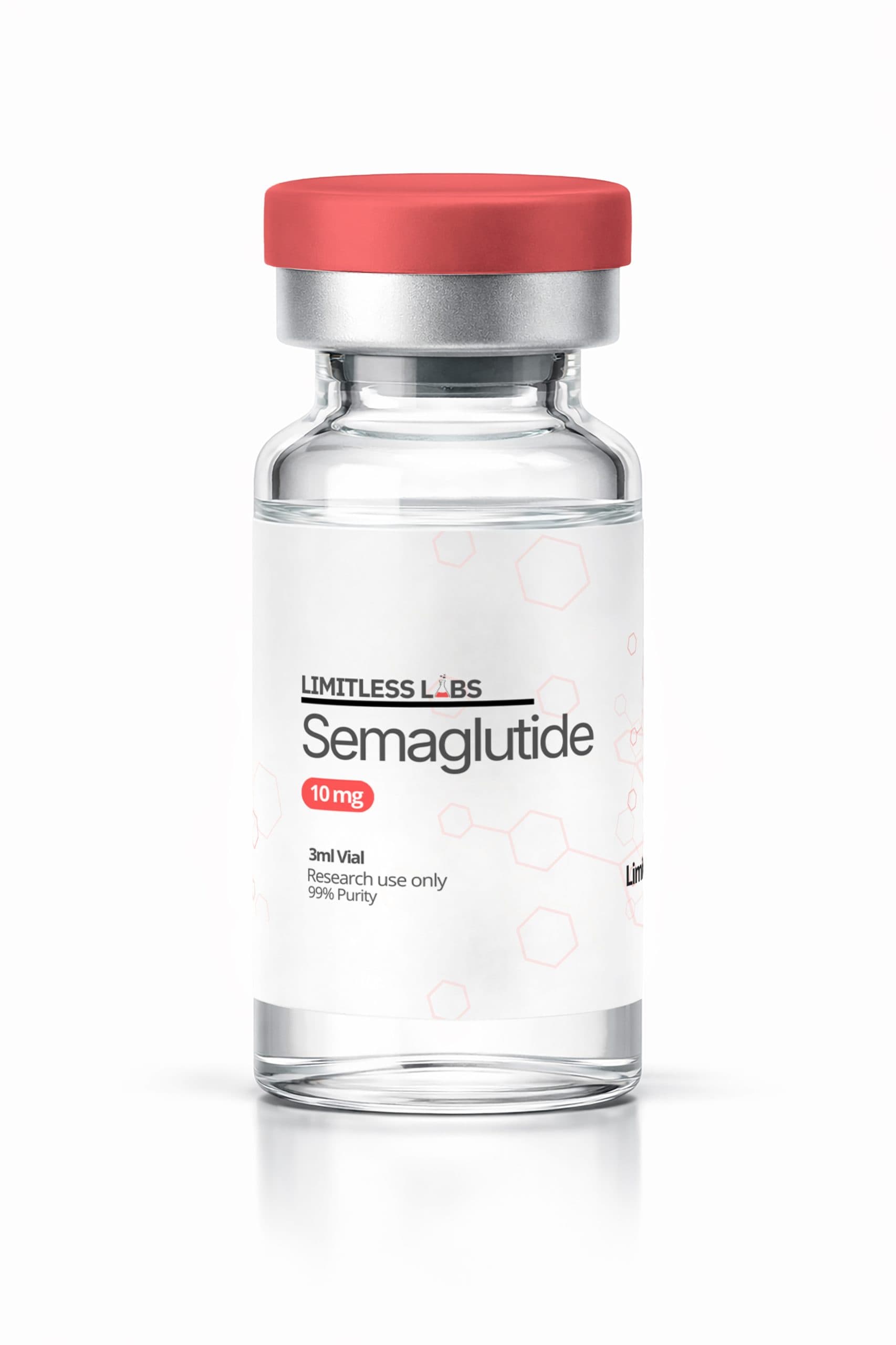
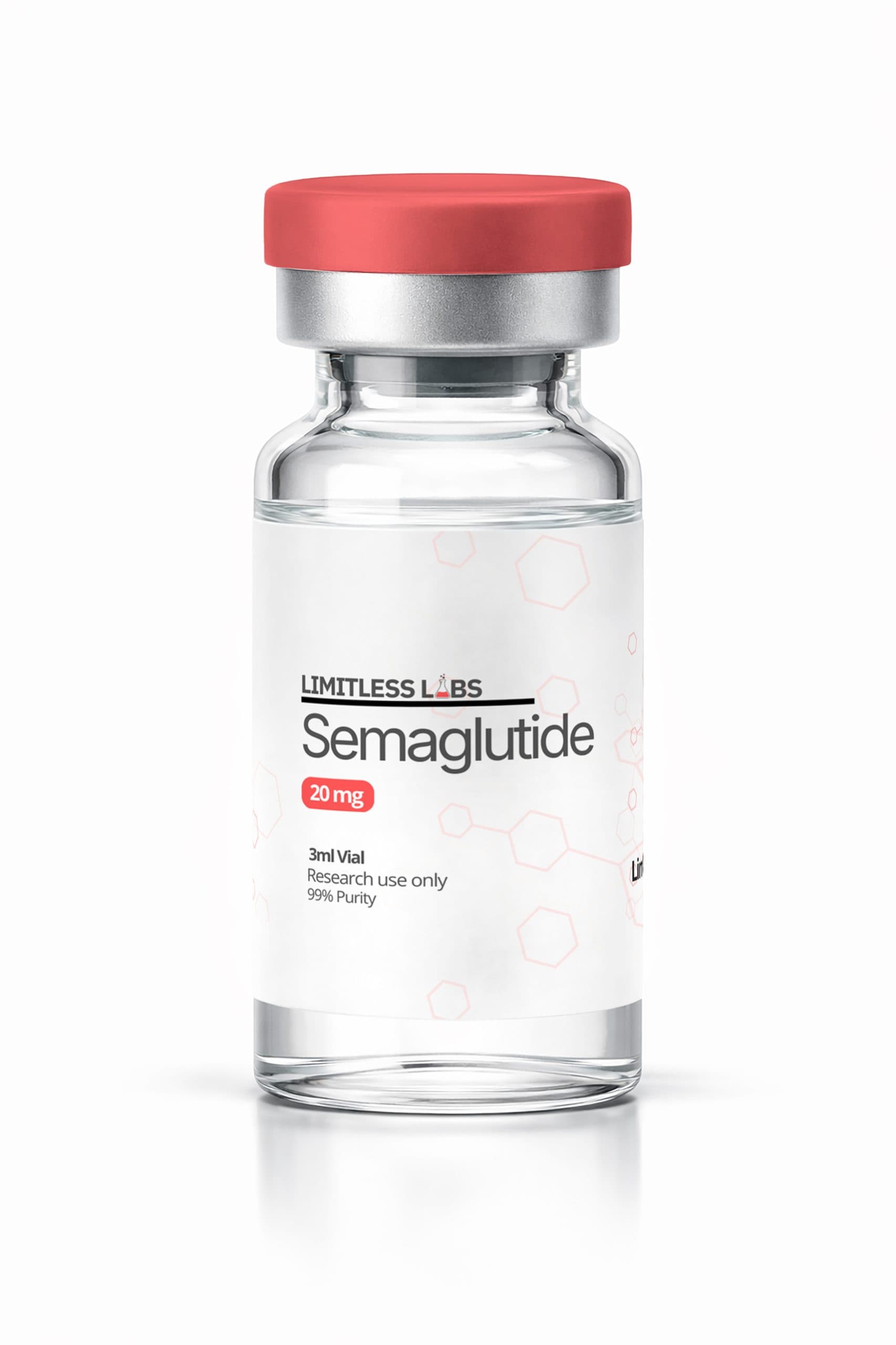
Semaglutide is a synthetic analogue of glucagon-like peptide-1 (GLP-1), a gut hormone involved in appetite regulation and glucose metabolism. It is among the most extensively studied peptides in modern clinical science: large randomized trials have examined its effects on body weight, blood sugar control, cardiovascular events, kidney disease progression, liver disease, and more. In clinical trials, participants receiving semaglutide experienced substantial reductions in body weight and improvements in glycemic markers, and dedicated outcome trials reported lower rates of major cardiovascular and kidney events compared with placebo [2][6][9][10]. This article summarizes the published research record. It is educational material for researchers — not medical advice, and not a guide to human use.
What Is Semaglutide?
Semaglutide was developed by scientists at Novo Nordisk as a long-acting successor to liraglutide, an earlier once-daily GLP-1 analogue. The design work, published by Lau and colleagues in the Journal of Medicinal Chemistry in 2015, describes how the team modified the native GLP-1 sequence — two amino acid substitutions (Aib at position 8, Arg at position 34) plus a fatty di-acid chain attached at lysine 26 — to increase albumin binding and resist enzymatic degradation, extending the molecule's half-life enough to support once-weekly administration in clinical studies [1].
Semaglutide subsequently moved through one of the largest clinical development programs in metabolic medicine and now exists as three approved pharmaceutical products: Ozempic (once-weekly injection for type 2 diabetes, first FDA-approved in 2017), Rybelsus (an oral tablet formulation, approved in 2019), and Wegovy (initially approved as a once-weekly injection for chronic weight management in 2021; later formulations and indications have separate labels). These regulated drug products — manufactured, dosed, and dispensed under pharmaceutical standards — are distinct from research-grade semaglutide material, which is intended solely for laboratory and research use and is not a substitute for any approved medication.
Mechanism of Action
Semaglutide is a GLP-1 receptor agonist: it binds and activates the same receptor as endogenous GLP-1, an incretin hormone released by intestinal L-cells after eating. Receptor activation produces several well-characterized effects observed across the trial literature:
- Glucose-dependent insulin secretion. GLP-1 receptor activation enhances insulin release from pancreatic beta cells when glucose is elevated, and suppresses glucagon secretion — a mechanism that underlies the HbA1c reductions seen throughout the SUSTAIN and PIONEER programs [7][8].
- Appetite and food intake. GLP-1 receptors in appetite-regulating regions of the brain mediate increased satiety and reduced hunger. In the STEP trials, this translated into lower energy intake and progressive weight loss in participants receiving semaglutide versus placebo [2][3].
- Gastric emptying. GLP-1 receptor agonism slows gastric emptying, which blunts post-meal glucose excursions and contributes to satiety, and is also thought to explain the gastrointestinal side effects (nausea, vomiting, constipation, diarrhea) that were the most commonly reported adverse events across essentially every major trial [2][6][9].
The 2015 discovery paper details the structural basis for the molecule's extended pharmacokinetics: strong reversible albumin binding acts as a circulating depot, while the amino acid substitutions protect against DPP-4 cleavage [1].
Research Findings by Area
Body Weight
The STEP (Semaglutide Treatment Effect in People with Obesity) program is the core weight-related evidence base.
- STEP 1 (Wilding et al., NEJM 2021) randomized 1,961 adults with overweight or obesity, without diabetes, to once-weekly semaglutide 2.4 mg or placebo alongside lifestyle intervention. At 68 weeks, mean body-weight change was approximately −14.9% with semaglutide versus −2.4% with placebo [2].
- STEP 2 (Davies et al., Lancet 2021) examined the same comparison in adults with type 2 diabetes and found superior, clinically meaningful weight reduction versus placebo, though smaller in magnitude than in participants without diabetes — a pattern seen consistently across the class [3].
- STEP 5 (Garvey et al., Nature Medicine 2022) extended observation to two years: mean weight change was −15.2% with semaglutide versus −2.6% with placebo at week 104, indicating that weight loss achieved in the first year was largely maintained while treatment continued [4].
- STEP 8 (Rubino et al., JAMA 2022) compared once-weekly semaglutide 2.4 mg head-to-head against once-daily liraglutide 3.0 mg; mean weight change at 68 weeks was −15.8% versus −6.4%, respectively — a direct demonstration that the second-generation molecule outperformed its predecessor [5].
Glycemic Control
The SUSTAIN program (injectable) and PIONEER program (oral) established semaglutide's effects on glucose regulation in type 2 diabetes.
- SUSTAIN 7 (Pratley et al., Lancet Diabetes & Endocrinology 2018) compared semaglutide against dulaglutide, another once-weekly GLP-1 agonist. From a mean baseline HbA1c of 8.2%, semaglutide produced greater HbA1c reductions at both dose tiers (e.g., −1.8 vs. −1.4 percentage points at the higher doses) along with greater weight loss [7].
- The PIONEER program studied an oral tablet formulation of semaglutide co-formulated with an absorption enhancer. PIONEER 6 (Husain et al., NEJM 2019), a 3,183-patient cardiovascular safety trial, confirmed noninferiority of oral semaglutide versus placebo for major adverse cardiovascular events (3.8% vs. 4.8% event rates over a median 15.9 months), supporting the viability of oral peptide delivery — itself a notable pharmaceutical-science milestone [8].
Cardiovascular Outcomes
- SUSTAIN-6 (Marso et al., NEJM 2016) was the first dedicated cardiovascular outcomes trial: among 3,297 patients with type 2 diabetes at high cardiovascular risk, the composite of cardiovascular death, nonfatal myocardial infarction, or nonfatal stroke occurred in 6.6% of semaglutide-treated participants versus 8.9% on placebo over roughly two years [6].
- SELECT (Lincoff et al., NEJM 2023) extended the question to people without diabetes. In 17,604 adults with established cardiovascular disease and overweight or obesity, semaglutide 2.4 mg reduced major adverse cardiovascular events by approximately 20% versus placebo over a mean follow-up of about three years — the first time a weight-management pharmacotherapy demonstrated a cardiovascular outcomes benefit in a non-diabetic population [9].
- SOUL (McGuire et al., NEJM 2025) showed the oral formulation can also improve outcomes: in 9,650 patients with type 2 diabetes plus atherosclerotic cardiovascular disease and/or chronic kidney disease, oral semaglutide reduced major adverse cardiovascular events by 14% versus placebo (12.0% vs. 13.8% event rates) [11].
- STRIDE (Bonaca et al., Lancet 2025) reported that in patients with symptomatic peripheral artery disease and type 2 diabetes, participants receiving semaglutide showed significantly greater improvement in maximum walking distance versus placebo at 52 weeks — a functional endpoint rather than an event-based one [12].
Kidney Outcomes
FLOW (Perkovic et al., NEJM 2024) randomized 3,533 patients with type 2 diabetes and chronic kidney disease to semaglutide 1.0 mg or placebo. The trial was stopped early for efficacy: the risk of major kidney disease events (kidney failure, substantial eGFR loss, or kidney or cardiovascular death) was 24% lower with semaglutide, and the annual rate of eGFR decline was significantly slower [10]. This was the first dedicated kidney-outcomes trial of a GLP-1 receptor agonist to read out positive on a primary kidney endpoint.
Emerging Research Areas
- Liver disease. The phase 3 ESSENCE trial (Sanyal et al., NEJM 2025) studied semaglutide in metabolic dysfunction–associated steatohepatitis (MASH) with fibrosis. At the 72-week interim analysis, 62.9% of semaglutide-treated participants achieved resolution of steatohepatitis without worsening of fibrosis versus 34.3% on placebo, and fibrosis improvement was also more frequent (36.8% vs. 22.4%) [13]. The FDA subsequently granted accelerated approval for Wegovy injection in adults with noncirrhotic MASH and moderate-to-advanced fibrosis (FDA, August 2025).
- Neurodegeneration. The evoke and evoke+ phase 3 trials tested oral semaglutide in early-stage symptomatic Alzheimer's disease across roughly 3,800 participants [16]. Topline results reported in late 2025 showed no statistically significant slowing of cognitive decline versus placebo on the primary endpoint, despite favorable changes in some disease biomarkers; the result is reported in the sponsor’s November 2025 announcement, separately from the design paper [16]. This is an important negative finding that tempers earlier epidemiological signals suggesting neuroprotection.
- Comparator and next-generation compounds. Research interest increasingly centers on how single-receptor GLP-1 agonism compares with multi-receptor approaches — covered in the FAQ below [14][15].
Limitations & Open Questions
The evidence base, while large, has clear boundaries worth understanding:
- Weight regain after discontinuation. Trial extensions and withdrawal studies in the STEP program indicate that a substantial portion of lost weight returns after treatment stops, implying the observed effects require ongoing exposure. Long-term maintenance strategies remain an open research area; the STEP 1 withdrawal extension is the relevant source for regain [20].
- Gastrointestinal tolerability. Nausea, vomiting, diarrhea, and constipation were the most common adverse events in virtually every trial and the leading cause of discontinuation [2][9][14].
- Lean mass and body composition. Weight lost in trials includes both fat and lean tissue; the long-term consequences of lean-mass loss, particularly in older populations, are still being characterized.
- Head-to-head efficacy. In the SURMOUNT-5 head-to-head trial, tirzepatide produced greater weight reduction than semaglutide (−20.2% vs. −13.7% at 72 weeks), so semaglutide is no longer the efficacy ceiling within incretin-based research [14].
- Negative and neutral findings. The evoke program's failure in Alzheimer's disease shows that benefits observed in cardiometabolic disease do not automatically generalize to other organ systems [16].
- Population gaps. Most landmark trials enrolled predominantly middle-aged adults; data in adolescents, the very elderly, and diverse ancestral populations are thinner, and mechanistic questions (for example, how much of the cardiovascular benefit is weight-independent) remain under active investigation [9].
Frequently Asked Questions
What is semaglutide, in one sentence? A long-acting synthetic analogue of the human hormone GLP-1, engineered for extended half-life via albumin binding, and studied across obesity, diabetes, cardiovascular, kidney, and liver research [1].
How does semaglutide differ from tirzepatide and retatrutide? Semaglutide activates a single receptor (GLP-1). Tirzepatide is a dual agonist of GIP and GLP-1 receptors, and in the SURMOUNT-5 head-to-head trial it produced greater weight reduction than semaglutide (−20.2% vs. −13.7% at 72 weeks) [14]. Retatrutide is an investigational triple agonist (GIP, GLP-1, and glucagon receptors); in a phase 2 trial, participants receiving the highest doses experienced mean weight reductions approaching 24% at 48 weeks, though it remains earlier in development with no completed phase 3 outcome trials [15]. Semaglutide currently has the deepest long-term outcomes evidence of the three [9][10][11].
What did the largest weight-related trial show? STEP 1: among 1,961 adults with overweight or obesity, participants receiving weekly semaglutide alongside lifestyle intervention experienced a mean body-weight change of about −14.9% at 68 weeks versus −2.4% with placebo [2].
Does the research show effects beyond weight and blood sugar? Yes. Dedicated outcome trials reported reductions in major cardiovascular events in people with diabetes (SUSTAIN-6) and without diabetes (SELECT), slower kidney disease progression (FLOW), improved walking capacity in peripheral artery disease (STRIDE), and higher rates of steatohepatitis resolution in MASH (ESSENCE) [6][9][10][12][13].
Is there an oral form in the literature? Yes — the PIONEER program studied an oral tablet co-formulated with an absorption enhancer, and the 2025 SOUL trial reported a 14% reduction in major cardiovascular events with the oral form in high-risk type 2 diabetes [8][11].
What were the most common adverse events in trials? Gastrointestinal effects — nausea, vomiting, diarrhea, and constipation — were the most frequently reported adverse events across the STEP, SUSTAIN, SELECT, and ESSENCE programs and the leading reason participants discontinued [2][6][9][13].
Is research-grade semaglutide the same as Ozempic or Wegovy? No. Ozempic, Wegovy, and Rybelsus are regulated pharmaceutical products manufactured to drug-quality standards with defined dosing and clinical oversight. Research-grade material is supplied for laboratory research use only and is not an approved drug, not a supplement, and not for human use.
Storage and Stability
Semaglutide is one of the few compounds in this library with formally published stability data. A 2025 preformulation study found its solution-state stability strongly pH-dependent, with the greatest degradation between pH 4.5 and 5.5 — near the peptide's isoelectric point (~5.4) — and comparative stability at neutral-to-alkaline pH, which is why finished formulations are buffered above pH 7 [17]. Short-term thermal tolerance in water was notable (the peptide remained stable for three hours at 80 °C), but degradation increased with temperature and time [17]. In the solid state, semaglutide retains its native α-helical structure up to about 60 °C, with extensive conformational loss and chemical degradation at higher temperatures [18]. A physical instability pathway is also documented: in aqueous solution the peptide self-associates into oligomeric micelles and short fibrils [19]. In laboratory practice these findings support the standard pattern for lipidated peptides: lyophilized stock stored frozen, desiccated, and protected from light; reconstitution into a near-neutral buffered solution as lab practice; solutions refrigerated at 2–8 °C; and agitation and freeze–thaw cycling minimized, since both favor aggregation [19].
References
Lau J, Bloch P, Schäffer L, et al. Discovery of the once-weekly glucagon-like peptide-1 (GLP-1) analogue semaglutide. J Med Chem. 2015;58(18):7370–7380. DOI: 10.1021/acs.jmedchem.5b00726
Wilding JPH, Batterham RL, Calanna S, et al. Once-weekly semaglutide in adults with overweight or obesity (STEP 1). N Engl J Med 2021;384:989–1002. DOI: 10.1056/NEJMoa2032183 · PubMed 33567185
Davies M, Færch L, Jeppesen OK, et al. Semaglutide 2.4 mg once a week in adults with overweight or obesity, and type 2 diabetes (STEP 2): a randomised, double-blind, double-dummy, placebo-controlled, phase 3 trial. Lancet 2021;397:971–984. PubMed 33667417
Garvey WT, Batterham RL, Bhatta M, et al. Two-year effects of semaglutide in adults with overweight or obesity: the STEP 5 trial. Nat Med 2022;28:2083–2091. DOI: 10.1038/s41591-022-02026-4 · PubMed 36216945
Rubino DM, Greenway FL, Khalid U, et al. Effect of weekly subcutaneous semaglutide vs daily liraglutide on body weight in adults with overweight or obesity without diabetes: the STEP 8 randomized clinical trial. JAMA 2022;327(2):138–150. PubMed 35015037
Marso SP, Bain SC, Consoli A, et al. Semaglutide and cardiovascular outcomes in patients with type 2 diabetes (SUSTAIN-6). N Engl J Med 2016;375:1834–1844. PubMed 27633186
Pratley RE, Aroda VR, Lingvay I, et al. Semaglutide versus dulaglutide once weekly in patients with type 2 diabetes (SUSTAIN 7): a randomised, open-label, phase 3b trial. Lancet Diabetes Endocrinol. 2018;6(4):275–286. DOI: 10.1016/S2213-8587(18)30024-X
Husain M, Birkenfeld AL, Donsmark M, et al. Oral semaglutide and cardiovascular outcomes in patients with type 2 diabetes (PIONEER 6). N Engl J Med. 2019;381:841–851. DOI: 10.1056/NEJMoa1901118
Lincoff AM, Brown-Frandsen K, Colhoun HM, et al. Semaglutide and cardiovascular outcomes in obesity without diabetes (SELECT). N Engl J Med 2023;389:2221–2232. DOI: 10.1056/NEJMoa2307563 · PubMed 37952131
Perkovic V, Tuttle KR, Rossing P, et al. Effects of semaglutide on chronic kidney disease in patients with type 2 diabetes (FLOW). N Engl J Med 2024;391(2):109–121. DOI: 10.1056/NEJMoa2403347 · PubMed 38785209
McGuire DK, Marx N, Mulvagh SL, et al. Oral semaglutide and cardiovascular outcomes in high-risk type 2 diabetes (SOUL). N Engl J Med 2025. DOI: 10.1056/NEJMoa2501006 · PubMed 40162642
Bonaca MP, et al. Semaglutide and walking capacity in people with symptomatic peripheral artery disease and type 2 diabetes (STRIDE): a phase 3b, double-blind, randomised, placebo-controlled trial. Lancet 2025. DOI: 10.1016/S0140-6736(25)00509-4 · PubMed 40169145
Sanyal AJ, Newsome PN, Kliers I, et al. Phase 3 trial of semaglutide in metabolic dysfunction–associated steatohepatitis (ESSENCE). N Engl J Med. 2025;392(21):2089–2099. DOI: 10.1056/NEJMoa2413258
Aronne LJ, et al. Tirzepatide as compared with semaglutide for the treatment of obesity (SURMOUNT-5). N Engl J Med 2025;393(1). DOI: 10.1056/NEJMoa2416394 · PubMed 40353578
Jastreboff AM, Kaplan LM, Frías JP, et al. Triple-hormone-receptor agonist retatrutide for obesity — a phase 2 trial. N Engl J Med 2023;389:514–526. DOI: 10.1056/NEJMoa2301972 · PubMed 37366315
Cummings JL, Atri A, Feldman HH, et al. evoke and evoke+: design of two large-scale, double-blind, placebo-controlled, phase 3 studies evaluating efficacy, safety, and tolerability of semaglutide in early-stage symptomatic Alzheimer's disease. Alzheimers Res Ther 2025;17. DOI: 10.1186/s13195-024-01666-7 · PubMed 39780249 · Trial registration: NCT04777396 (evoke); NCT04777409 (evoke+)
Malgave A, Akbar S, Tiwari A, et al. Influence of buffering capacity, pH, and temperature on the stability of semaglutide: a preformulation study. J Pept Sci 2025;31(8):e70039. DOI: 10.1002/psc.70039 · PubMed 40635175
Akbar S, Malgave A, Joseph A, et al. Thermally stressed solid-state stability of semaglutide: understanding the influence of temperature on protein content, secondary structure, phase transition, and chemical degradation. Pharm Res 2026;43(5):1579–1597. DOI: 10.1007/s11095-026-04094-4 · PubMed 42086873
Hamley IW, de Mello LR, Castelletto V, et al. Semaglutide aggregates into oligomeric micelles and short fibrils in aqueous solution. Biomacromolecules 2025;26(6):3786–3794. DOI: 10.1021/acs.biomac.5c00342 · PubMed 40355389
Wilding JPH, et al. Weight regain and cardiometabolic effects after withdrawal of semaglutide: The STEP 1 trial extension. Diabetes Obes Metab. 2022;24(8):1553-1564. doi:10.1111/dom.14725. PMID: 35441470
This article is an educational summary of published research. It is not medical advice, and nothing here describes or endorses human use of research-grade material. Consult the primary literature linked above for full methods, populations, and safety data.