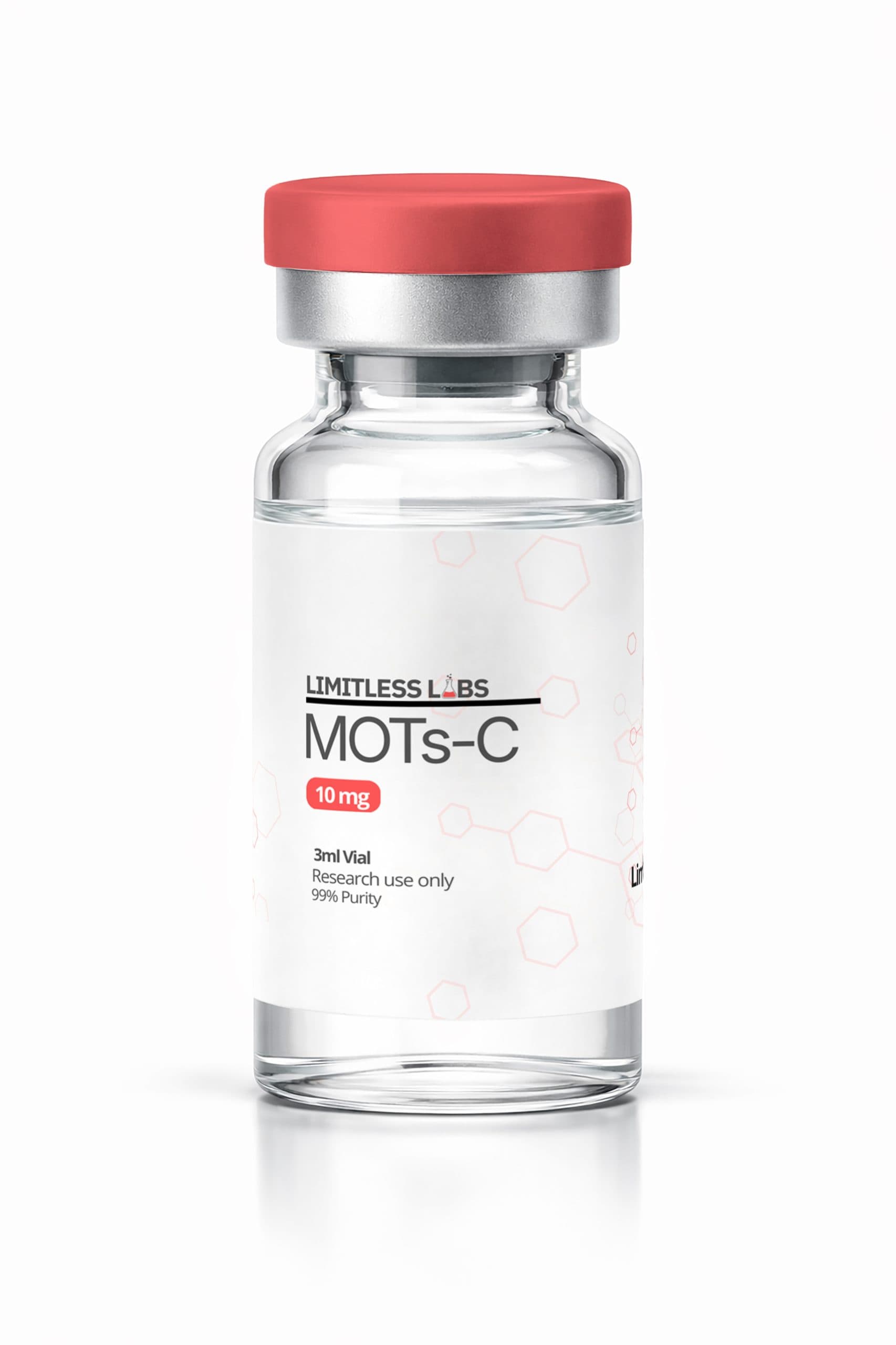
MOTS-c is a 16-amino-acid peptide encoded not by nuclear DNA, like almost every other protein in the body, but by a short reading frame tucked inside the mitochondrial genome's 12S rRNA gene. Discovered in 2015 at the University of Southern California, it activates the cellular energy sensor AMPK and has been studied largely as a candidate "exercise-mimetic" signal — a molecule that appears, in mice, to reproduce some metabolic effects of physical training. A separate line of human genetics research has linked a natural variant of the MOTS-c gene to longevity and muscle-fiber composition in Japanese and Korean populations. One point should be made plainly before anything else: almost all of the mechanistic and interventional evidence for MOTS-c comes from rodent and cell-culture experiments. The human evidence base is real but categorically different — it includes observational studies and exercise interventions, rather than controlled trials administering native MOTS-c. A distinct analog, CB4211, reached early-phase human testing; the results cited below are sponsor reports rather than a full peer-reviewed outcome paper. MOTS-c is not an approved drug, and it is prohibited at all times in Olympic and other WADA-code sport.
What Is MOTS-c?
MOTS-c — Mitochondrial Open reading frame of the Twelve S rRNA type-c — was identified through a bioinformatic search for functional short open reading frames hidden within the human mitochondrial genome, the same strategy that had previously turned up the peptide humanin. Researchers led by Changhan Lee and Pinchas Cohen reported that this sORF, located within the gene for the mitochondrial 12S ribosomal RNA, encodes a genuine 16-amino-acid peptide detectable in human cells and plasma that regulates insulin sensitivity and metabolic homeostasis in mice [1]. This showed that the mitochondrial genome, long assumed to encode only electron-transport-chain components, also produces peptide signals acting outside the mitochondrion — including, as later work showed, inside the cell nucleus [2].
MOTS-c belongs to a small family of "mitochondrial-derived peptides" (MDPs) that includes humanin and the more recently described SHLPs. Unlike a synthetic research peptide modeled on a therapeutic hypothesis, MOTS-c is endogenous — everyone's mitochondria already encode it. The open questions are what regulates its levels, what it does when experimentally administered, and whether a naturally occurring coding-sequence variant has functional consequences.
Mechanism of Action
AMPK activation via the folate cycle. The foundational 2015 paper reported that MOTS-c activates AMP-activated protein kinase (AMPK) — a master regulator of cellular energy balance — through a route distinct from the conventional AMP/ATP-ratio sensing mechanism, instead inhibiting the folate cycle and its associated de novo purine biosynthesis pathway. Its primary target organ in that model was skeletal muscle, and MOTS-c treatment prevented age-dependent and high-fat-diet-induced insulin resistance, as well as diet-induced obesity, in mice [1].
Nuclear translocation under metabolic stress. A follow-up USC study reported that under metabolic stress (glucose restriction or oxidative agents such as tert-butyl hydrogen peroxide), MOTS-c translocates into the cell nucleus in an AMPK-dependent manner, regulating antioxidant-response-element (ARE) genes and physically interacting with the transcription factor NRF2 — framed as evidence that the mitochondrial and nuclear genomes co-evolved to cross-regulate one another, a "mitonuclear communication" hypothesis broader than MOTS-c itself [2]. A later mouse study found MOTS-c translocating from cytoplasm to nucleus in soleus muscle (in a minority of animals) after an acute downhill-running challenge, offering partial in vivo support outside the original cell-culture system [3].
The K14Q variant. A naturally occurring East Asian-specific mtDNA polymorphism (m.1382A>C, rs111033358) changes the 14th amino acid of MOTS-c from lysine to glutamine (K14Q), a variant reported to have reduced biological activity relative to the wild-type peptide — a detail underlying the genetic-association research below.
These mechanisms were assembled almost entirely from rodent and cell-culture experiments. Whether the AMPK/folate-cycle and nuclear-translocation mechanisms operate the same way in humans has not been established by any published interventional study.
Research Findings by Area
Metabolic homeostasis and diet-induced obesity (rodent models)
The discovery paper remains the central reference: MOTS-c administration prevented age-related and high-fat-diet-induced insulin resistance and blocked diet-induced obesity in mice [1]. A later genetics-and-mouse study extended this — high-fat-fed male mice injected with wild-type MOTS-c showed reduced body weight and improved glucose tolerance, while K14Q-variant-injected mice did not, direct evidence the variant's reduced activity blunts the metabolic effect [9]. In a rat model of type 2 diabetes, three weeks of daily MOTS-c injection (15 mg/kg) was associated with lower fasting glucose, improved glucose homeostasis, and reduced cardiac hypertrophy, with isolated heart mitochondria showing increased respiration versus untreated diabetic tissue [14]. A 2025 study found treating aged mouse pancreatic islets with MOTS-c reduced islet-cell senescence markers and improved glucose intolerance in two diabetic mouse models; the same paper's one human data point — circulating MOTS-c was lower in type 2 diabetes patients than healthy controls [13].
Nuclear gene regulation and the stress-response ("mitonuclear") pathway
MOTS-c's AMPK-dependent movement into the nucleus under glucose restriction or oxidative stress, its interaction with NRF2, and its regulation of antioxidant-response-element genes were characterized entirely in cultured cells [2]. In vivo confirmation is thinner — the downhill-running mouse experiment noted above observed nuclear translocation in only two of six animals, and only in soleus, not plantaris, muscle from the same animals — a reminder of how much more variable the phenomenon looks outside a controlled cell-culture system [3].
Exercise physiology: mouse performance and human plasma dynamics
This is the area responsible for MOTS-c's "exercise mimetic" reputation, and the human data here are genuinely mixed. In mice, mitochondrial-encoded MOTS-c enhanced physical performance across young (2-month), middle-age (12-month), and old (22-month) age groups, and intermittent treatment initiated late in life (starting at 23.5 months) increased physical capacity and healthspan measures in aged animals [4]. A separate mouse study found that four to eight weeks of voluntary wheel running increased MOTS-c protein roughly 1.5- to 5-fold across three hindlimb muscles, persisting through four to six weeks of detraining; a single 15 mg/kg dose given to untrained mice increased total running time by about 12% and distance by about 15% in an acute exercise test [3].
Human exercise findings differ across studies. Reynolds and colleagues reported that exercise increased MOTS-c in human skeletal muscle and circulation [4]. In a randomized trial of 30 untrained adults, 45 minutes of cycling at 70% VO2max significantly raised circulating humanin, but MOTS-c showed only a nonsignificant trend, and resistance exercise raised neither peptide; resting levels correlated with neither VO2max, leg strength, nor muscle mitochondrial DNA copy number [5]. A cross-sectional comparison of 75 professional athletes (Qatar) to 30 sedentary controls found the opposite of what an "exercise raises MOTS-c" narrative predicts: athletes had lower serum MOTS-c and higher humanin than controls, with no difference between high- and low/moderate-endurance subgroups [6]. A smaller study found resting serum MOTS-c correlated positively with jump power, force, and muscle mass, but not body fat or peak VO2 [7]. Together, direction and significance shift across acute-versus-chronic designs and cohorts — a pattern that does not support a simple, consistent human "exercise mimetic" story.
The K14Q polymorphism, longevity, and muscle-fiber composition
This is one of the more instructive threads in the MOTS-c literature because the field's own conclusions changed as data accumulated. The initial hypothesis, from a 2015 short communication, proposed that the m.1382A>C (K14Q) variant — specific to Northeast Asian populations and linked to a haplogroup enriched among Japanese centenarians — might contribute to that population's exceptional longevity [8]. A much larger follow-up (three Japanese cohorts, 27,527 people) instead found men, though not women, carrying the C-allele (K14Q) had a higher prevalence of type 2 diabetes, most pronounced with low physical activity — a "kinesio-genomic" interaction [9]. A related study found C-allele carriers had more fast-twitch (MHC-IIx) muscle fiber and higher leg peak torque in men; the C-allele was more common among sprint/power athletes (6.5%) than controls (5.1%) or endurance athletes (2.9%), and a mouse antibody experiment mimicking the C-allele increased fast-twitch muscle protein [10]. A 2024 study in Korean adults 65+ found C-allele men had significantly greater muscle mass, lean mass, and handgrip strength than A-allele men, with no difference in women [11].
Read together, this work has moved from an initial "protective longevity variant" hypothesis toward a more nuanced picture: K14Q appears to shift muscle physiology toward a fast-twitch, power-oriented phenotype and away from MOTS-c's full metabolic activity, with consequences that depend on sex, activity level, and which outcome is measured — a reminder that an early genetic-association hypothesis can be substantially revised by larger, better-powered studies.
Age-related and disease-state changes in circulating MOTS-c
Beyond the polymorphism literature, several groups have measured how circulating (as opposed to genetically determined) MOTS-c tracks with age and disease. The athlete study above notes that MDP levels, including MOTS-c, are generally reported to decline with age [6]. A 2025 study of 77 adults found serum MOTS-c inversely related to obstructive sleep apnea severity, correlating with BMI, the apnea-hypopnea index, and the oxygen desaturation index independent of age [12]. As noted above, circulating MOTS-c was also lower in people with type 2 diabetes than in matched healthy controls [13]. These are cross-sectional associations; none establish that low MOTS-c causes these conditions, or that raising it would change disease course in humans.
Exogenous administration in humans: the CB4211 program
One early human development program tested CB4211, described by its developer as "a novel and improved analog" of MOTS-c rather than the native peptide. CohBar, Inc. developed CB4211 for nonalcoholic steatohepatitis (NASH) and obesity, testing it in a multicenter, randomized, double-blind, placebo-controlled Phase 1a/1b study registered as NCT03998514. The company reported CB4211 was well tolerated with no serious adverse events, and that the Phase 1b portion — four weeks of dosing in 20 obese subjects with fatty liver disease — showed reductions in the liver-injury markers ALT and AST, a decrease in glucose, and a trend toward lower body weight versus placebo. These results were presented as a late-breaking poster at the 2021 AASLD Liver Meeting and in company press releases; the sources cited here do not include a full peer-reviewed report of those results, limiting outside scrutiny of the underlying data. The registry and sponsor disclosures should be checked for subsequent program updates; this historical report does not establish present trial activity. Even at face value, this is analog data — CB4211 is structurally distinct from native MOTS-c — so it cannot be read as evidence about the parent peptide's safety or effects in humans.
Limitations and Open Questions
No administered-native-peptide evidence in the cited human studies. The human exercise, biomarker and genetic studies summarized here do not establish what administering native MOTS-c would do. The CB4211 program concerns a distinct analog, so its findings cannot be transferred directly to the native peptide.
Concentration in a small set of overlapping research groups. A large share of the foundational mechanistic and mouse work comes from one USC laboratory (Cohen and Lee, with collaborators), and several of these papers disclose the senior authors as consultants and shareholders in CohBar, Inc., the company that also developed CB4211 [1,2,4,9,10] — a direct financial interest in the compound class studied.
Conflicting human exercise data. One study reported exercise-induced increases in human muscle and circulating MOTS-c [4], another found a nonsignificant circulating trend [5], and an observational athlete comparison found lower resting levels [6]. Differences in design, sampling and participants matter; none of these findings establishes benefits from administering native MOTS-c.
A genetic hypothesis that reversed direction. K14Q was first proposed as a longevity-associated variant [8] and was later associated with increased type 2 diabetes risk in men in a much larger cohort [9]. Both findings appear methodologically sound for what they measured; the shift illustrates that an early, small-sample hypothesis in this literature should be treated as provisional.
Regulatory status. MOTS-c is not an approved drug anywhere. The FDA has listed it among substances nominated for, and later removed from, its "Category 2" bulk drug substance list for compounding, citing immunogenicity risk and peptide-impurity/characterization concerns (FDA, bulk drug substances page). Its Pharmacy Compounding Advisory Committee discussed MOTS-c for obesity and osteoporosis at its July 2026 meeting; reporting indicates the committee voted to favor eventual compounding-list inclusion despite FDA briefing materials reportedly noting no nonclinical or human safety/efficacy data. A favorable committee vote is not an approval — any rulemaking that could follow is separate and lengthy. In competitive sport, MOTS-c is prohibited at all times under WADA Section S4.4 (Metabolic Modulators — AMPK activators).
Mechanistic incompleteness. The AMPK/folate-cycle mechanism and the nuclear-translocation/NRF2 pathway are both derived largely from cell-culture work, with only partial in vivo confirmation. The growing list of reported associations — metabolic, muscular, pancreatic, cardiac, and correlational links to sleep apnea and diabetes — spans a wide range of physiology for one small peptide, and that breadth is itself a reason for measured skepticism pending independent replication.
Frequently Asked Questions
Has MOTS-c been tested in humans? Human evidence includes exercise interventions, observational measurements and an early trial of a distinct analog. Human studies have measured how plasma MOTS-c changes with exercise [5,6,7] or disease [12,13], and how the K14Q gene variant correlates with muscle composition, diabetes risk, and sarcopenia [8,9,10,11]. The cited human studies do not test administration of native MOTS-c. CB4211 is a distinct analog, and its early findings are described in sponsor and conference reports.
What does "MOTS-c" stand for? Mitochondrial Open reading frame of the Twelve S rRNA type-c, referencing its discovery within a short reading frame inside the mitochondrial 12S ribosomal RNA gene [1].
Is MOTS-c an "exercise pill"? That framing outruns the evidence. Mouse studies report enhanced physical performance and exercise-induced increases in muscle MOTS-c [3,4], but human data are inconsistent — Reynolds and colleagues reported exercise-induced increases [4], another trial found only a nonsignificant trend after acute exercise [5], and professional endurance athletes showed lower, not higher, resting MOTS-c than sedentary controls in another [6].
Is the MOTS-c longevity story confirmed? No. The 2015 hypothesis proposed K14Q as a possible contributor to Japanese longevity [8], but a larger follow-up of over 27,000 people instead found it associated with higher type 2 diabetes risk in men [9], and other studies link it to fast-twitch muscle composition and sprint/power performance rather than a longevity benefit [10,11].
Is MOTS-c FDA approved? No, for any indication. It has been listed among nominated-and-withdrawn or Category 2 bulk substances, and a 2026 advisory committee discussed but did not approve it for compounding; any pathway forward would require further FDA rulemaking.
What happened to CB4211? Its developer, CohBar, Inc., reported positive Phase 1a/1b safety and biomarker signals in obese subjects with fatty liver disease but never published the data as a peer-reviewed paper. These historical sponsor reports do not establish current program status or efficacy of native MOTS-c.
Can athletes use MOTS-c? No. It is prohibited at all times under WADA Prohibited List Section S4.4, which identifies MOTS-c among AMPK activators.
References
- Lee C, Zeng J, Drew BG, et al. The mitochondrial-derived peptide MOTS-c promotes metabolic homeostasis and reduces obesity and insulin resistance. Cell Metab. 2015;21(3):443-454. doi:10.1016/j.cmet.2015.02.009 — PMID: 25738459
- Kim KH, Son JM, Benayoun BA, Lee C. The Mitochondrial-Encoded Peptide MOTS-c Translocates to the Nucleus to Regulate Nuclear Gene Expression in Response to Metabolic Stress. Cell Metab. 2018;28(3):516-524.e7. doi:10.1016/j.cmet.2018.06.008 — PMID: 29983246
- Hyatt JK. MOTS-c increases in skeletal muscle following long-term physical activity and improves acute exercise performance after a single dose. Physiol Rep. 2022;10(13):e15377. doi:10.14814/phy2.15377 — PMID: 35808870
- Reynolds JC, Lai RW, Woodhead JST, et al. MOTS-c is an exercise-induced mitochondrial-encoded regulator of age-dependent physical decline and muscle homeostasis. Nat Commun. 2021;12(1):470. doi:10.1038/s41467-020-20790-0 — PMID: 33473109
- von Walden F, Fernandez-Gonzalo R, Norrbom J, et al. Acute endurance exercise stimulates circulating levels of mitochondrial-derived peptides in humans. J Appl Physiol (1985). 2021;131(3):1035-1042. doi:10.1152/japplphysiol.00706.2019 — PMID: 34351816
- Alser M, Ramanjaneya M, Rizwana Anwardeen N, et al. The Effect of Chronic Endurance Exercise on Serum Levels of MOTS-c and Humanin in Professional Athletes. Rev Cardiovasc Med. 2022;23(5):181. doi:10.31083/j.rcm2305181 — PMID: 39077591
- Domin R, Pytka M, Żołyński M, et al. MOTS-c Serum Concentration Positively Correlates with Lower-Body Muscle Strength and Is Not Related to Maximal Oxygen Uptake-A Preliminary Study. Int J Mol Sci. 2023;24(19):14951. doi:10.3390/ijms241914951 — PMID: 37834399
- Fuku N, Pareja-Galeano H, Zempo H, et al. The mitochondrial-derived peptide MOTS-c: a player in exceptional longevity? Aging Cell. 2015;14(6):921-923. doi:10.1111/acel.12389 — PMID: 26289118
- Zempo H, Kim SJ, Fuku N, et al. A pro-diabetogenic mtDNA polymorphism in the mitochondrial-derived peptide, MOTS-c. Aging (Albany NY). 2021;13(2):1692-1717. doi:10.18632/aging.202529 — PMID: 33468709
- Kumagai H, Natsume T, Kim SJ, et al. The MOTS-c K14Q polymorphism in the mtDNA is associated with muscle fiber composition and muscular performance. Biochim Biophys Acta Gen Subj. 2022;1866(2):130048. doi:10.1016/j.bbagen.2021.130048 — PMID: 34728329
- Kim S. The Relationship Between MOTS-c K14Q Polymorphism and Sarcopenia, Blood Lipids, and Mental Health in Older Korean Adults. Biomedicines. 2024;12(10):2384. doi:10.3390/biomedicines12102384 — PMID: 39457696
- Luo Z, Ji R, Ye R, Shi Y, Pang Q, Yin M. Reduced serum levels of mitochondria-derived peptide MOTS-c in patients with obstructive sleep apnea. Sleep Biol Rhythms. 2025;23(3):305-311. doi:10.1007/s41105-025-00578-9 — PMID: 40538389
- Kong BS, Lee H, L'Yi S, Hong S, Cho YM. Mitochondrial-encoded peptide MOTS-c prevents pancreatic islet cell senescence to delay diabetes. Exp Mol Med. 2025;57(8):1861-1877. doi:10.1038/s12276-025-01521-1 — PMID: 40855115
- Pham T, Taberner A, Hickey A, Han JC. Mitochondria-derived peptide MOTS-c restores mitochondrial respiration in type 2 diabetic heart. Front Physiol. 2025;16:1602271. doi:10.3389/fphys.2025.1602271 — PMID: 40661667
This article is an educational summary of published research. It is not medical advice, and it does not describe, endorse, or recommend any use of MOTS-c in humans. MOTS-c is not an approved drug. Products referenced on this site are sold for laboratory research use only.